
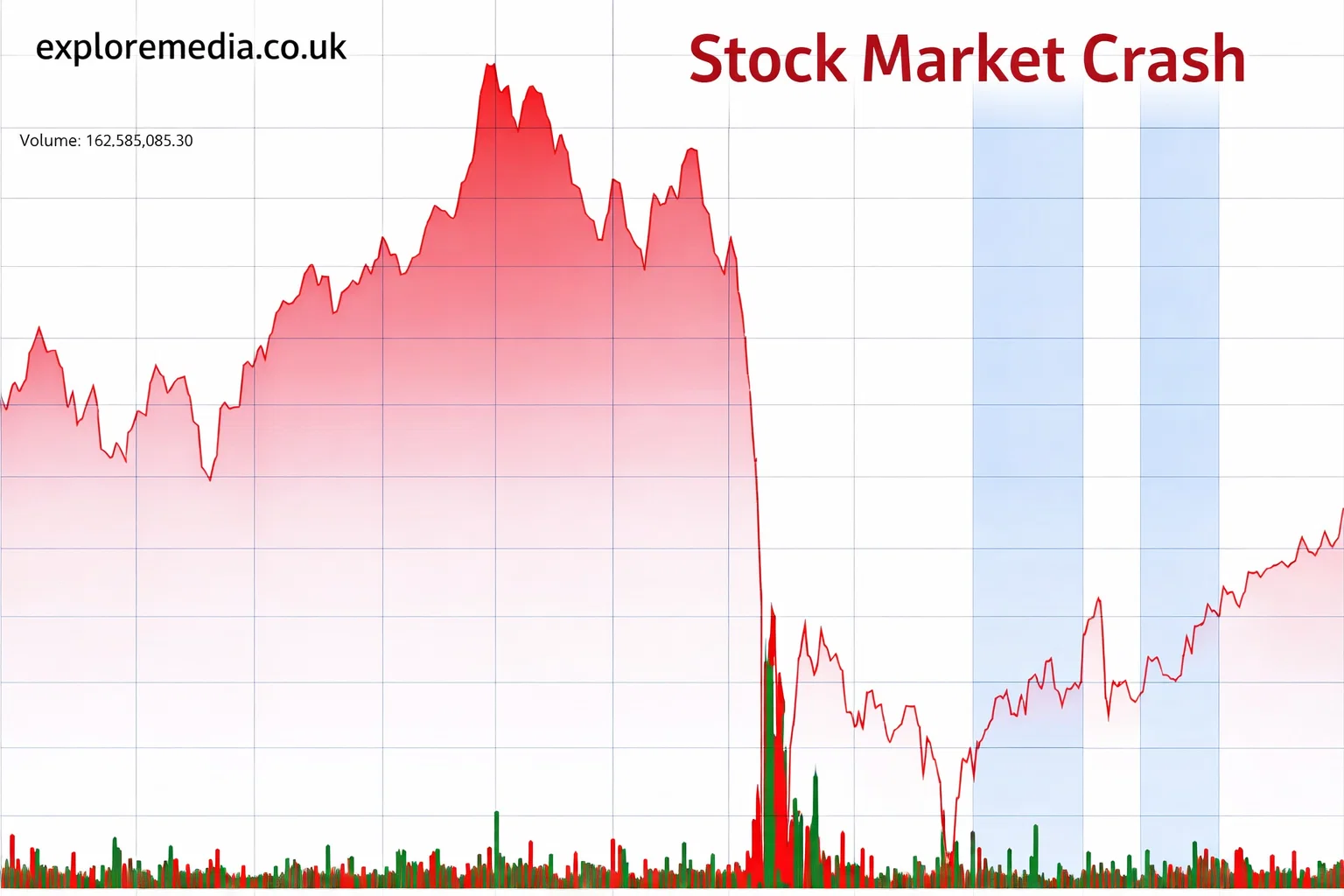
Introduction to Stock Market Crashes
A stock market crash refers to a sudden, significant decline in the value of stocks within a particular stock market. This sharp decrease typically occurs over a short period, often caused by widespread panic among investors. Such events can lead to substantial economic consequences and can affect the markets at large, making them a subject of much study and analysis in financial history.
Stock market crashes are distinct from regular market corrections, which are defined as declines of 10% or more in stock prices that occur periodically in a healthy financial system. Unlike these corrections, which are often seen as a natural part of market cycles, crashes are characterized by extreme volatility and investor fear. Historical examples, such as the Great Depression in 1929 or the financial crisis of 2008, illustrate how crashes can lead to long-term economic downturns and, in some instances, result in extensive government intervention to stabilize the market.
The implications of a stock market crash can be profound, affecting not only individual investors who may see their portfolios diminish in value but also larger businesses and economic systems. When a crash occurs, investor confidence typically plummets, leading to decreased consumer spending and a slowdown in economic growth. Consequently, understanding the causes and effects of stock market crashes is essential for investors and policymakers alike, aiding in the development of informed strategies to mitigate risks and navigate the new market landscape.
Historical Instances of Stock Market Crashes
Throughout history, stock market crashes have significantly impacted economies, investor confidence, and the broader society. One of the most notable incidents is the Great Depression, which began with the stock market crash of 1929. Triggered by a speculative bubble and rampant stock buying on margin, the collapse wiped out millions of investors and led to an economy that spiraled into a decade-long depression. Unemployment soared, businesses failed, and a loss of trust in financial institutions marked this era. Key lessons drawn from this event emphasize the dangers of unchecked speculation and the importance of regulatory oversight.
Following this, the Dot-com bubble of the late 1990s serves as another striking example of a stock market crash influenced by speculative investments. Fueled by the rise of internet-based companies, investors poured money into tech stocks without a sustainable business model or profit forecast, resulting in an unsustainable valuation surge. When reality set in around 2000, the Nasdaq composite index plummeted nearly 80% from its peak, leading to widespread market losses and a reevaluation of technology investments. This crash highlighted the necessity for investors to conduct thorough due diligence before engaging in high-risk investments.
The financial crisis of 2008, often regarded as one of the most severe stock market crashes in recent history, was precipitated by the collapse of the housing bubble and high-risk mortgage-backed securities. The failure of major financial institutions triggered a global recession, resulting in significant asset devaluation and widespread unemployment. The aftermath emphasized the importance of comprehensive regulatory frameworks to prevent systematic risks and protect investors. Overall, these historical instances of stock market crashes not only reflect the fragility of financial markets but also underline critical lessons about investment prudence, regulation, and the cyclical nature of economies.
Common Causes of Stock Market Crashes
Stock market crashes often arise from a combination of underlying factors that create an unstable environment. One of the primary causes is related to economic indicators, such as inflation rates, unemployment levels, and overall economic growth. When these indicators show signs of deterioration, investor confidence may wane, leading to panic selling and a subsequent drop in stock prices.
Another significant contributor to market downturns is investor behavior. Emotional factors like fear and greed often lead to irrational market movements. For example, during periods of high volatility, investors may sell stocks hastily to mitigate losses, further driving down prices and intensifying the market crash. Conversely, excessive optimism in a booming market can lead to inflated asset prices, setting the stage for a sharper decline once reality sets in.
Geopolitical events also play a pivotal role in stimulating stock market crashes. Crises such as political instability, war, or significant regulatory changes can disrupt global markets. The uncertainty created by these events may lead to reduced investment and consumer spending, contributing to a downturn. Additionally, changes in monetary policy, such as interest rate hikes intended to curb inflation, can result in decreased market liquidity and a cooling off of market performance.
Technological advancements and shifts can further influence market dynamics. For instance, a rapid increase in algorithmic trading has the potential to amplify market fluctuations, creating flash crashes which can deplete investor wealth in a matter of minutes. Similarly, cyber attacks or technology failures disrupting trading platforms can also trigger significant market corrections.
The Psychological Impact of Stock Market Crashes
The effects of a stock market crash go beyond mere financial loss; they significantly influence the psychological state of investors. Behavioral finance provides insight into how cognitive biases and emotional reactions can dictate decision-making during periods of market turmoil. Panic selling, a common reaction during a downturn, often results in individuals divesting in haste, ultimately exacerbating the market decline. This behavior is generally driven by an intense fear of further losses, which can cloud judgment and lead investors to overlook fundamental business valuations.
Another critical aspect to consider is loss aversion, a psychological phenomenon where the pain of losses is felt more acutely than the pleasure of equivalent gains. When investors witness dramatic price drops, the fear of not recovering losses might push them to act irrationally, selling assets at depressed prices rather than waiting for a potential recovery. This response can create a self-fulfilling prophecy, where widespread loss aversion leads to a continued decline in stock prices.
Emotional responses also play a crucial role in navigating stock market crashes. Many investors experience stress, anxiety, and uncertainty during such events, which may further impair rational thinking. The lack of a coherent strategy often leads to reactive behaviors rather than thoughtful decision-making. This psychological impact can result in a cyclic pattern where declining trust in the market prompts more selling, contributing to ongoing instability.
Ultimately, understanding the psychological effects of a stock market crash is essential for both individual investors and market analysts. By acknowledging these emotional and cognitive responses, investors can develop more resilient strategies that guard against panic-driven decisions. Recognizing that a stock market crash is often accompanied by significant psychological turmoil is key to fostering better financial choices during turbulent times.
The Economic Consequences of a Stock Market Crash
A stock market crash can have widespread and profound effects on the broader economy, often triggering a chain reaction of negative consequences. One of the earliest implications of a crash is a significant decline in consumer confidence. As stock prices plummet, individuals may feel uncertain about their financial stability and future economic prospects, leading to decreased consumer spending. When people are less willing to spend, businesses experience reduced revenues, further exacerbating economic distress.
Following a stock market crash, there is often a notable downturn in consumer spending, which constitutes a major component of economic growth. When consumers tighten their belts and refrain from making purchases, particularly on big-ticket items such as homes and automobiles, it can lead to a stagnation or contraction of industries reliant on consumer goods. Retail, automotive, and housing sectors might witness a marked decline, leading to a further ripple effect throughout the economy.
Unemployment rates can also rise sharply in the aftermath of a stock market crash. As companies encounter dwindling revenues, they may resort to cost-cutting measures, including layoffs or hiring freezes, resulting in an increased number of unemployed individuals. This surge in unemployment can place additional strains on social systems and decrease overall economic productivity, creating a cycle that is hard to break. Furthermore, sectors often interconnected with the stock market, such as finance and technology, can suffer substantial losses, impacting innovation and growth in these areas.
In addition, a stock market crash may influence the availability of capital, leading to tighter credit conditions. Financial institutions may respond by increasing lending standards or reducing credit lines, hindering businesses and consumers from accessing funds necessary for investment and spending. This credit crunch can deepen economic declines and prolong recovery periods. Ultimately, the economic consequences of a stock market crash extend far beyond financial markets, shaping the landscape of entire economies on various levels.
Strategies for Investors During a Stock Market Crash
Investing during a stock market crash can be a challenging experience, but implementing certain strategies may help mitigate risks and promote recovery in the long term. One of the most effective approaches is diversification. By spreading investments across various asset classes, sectors, and geographic regions, investors can reduce their exposure to any single investment’s volatility. During a downturn, diversified portfolios often perform better than concentrated investments in one area.
Another essential strategy to consider is focusing on long-term investments. Historically, the stock market has shown resilience, recovering from numerous downturns over the decades. Investors who adopt a long-term perspective may find that market crashes ultimately present buying opportunities. By investing in fundamentally strong companies at lower prices during a downturn, individuals can position themselves for substantial gains when the market rebounds.
Maintaining liquidity is also crucial during a stock market crash. Investors should consider keeping a portion of their portfolio in liquid assets, which can be converted to cash quickly. This strategy not only provides a safety net during turbulent periods but also allows investors to take advantage of attractive buying opportunities as they arise. Having cash readily available can protect against the need to sell other investments at a loss in a downturn.
Additionally, it is wise to avoid panic selling. Emotional reactions to market drops can lead to poor decision-making. Instead, investors should reassess their financial plans, stay informed about market conditions, and consider consulting with financial advisors for tailored guidance. By remaining calm and strategic, investors can navigate the turbulence of a stock market crash with resilience and foresight.
The Role of Government and Central Banks in Mitigating Crashes
The occurrence of a stock market crash can significantly disrupt the financial system, leading to widespread economic repercussions. Government interventions and central banks play critical roles in alleviating the impacts of such downturns. By employing various monetary and fiscal strategies, they aim to stabilize markets and restore investor confidence.
One of the primary tools utilized by central banks during a stock market downturn is monetary policy. This includes altering interest rates to encourage borrowing and investment. Lowering interest rates makes loans more affordable for individuals and businesses, thereby stimulating economic activity. In some cases, central banks may also engage in quantitative easing, a strategy where they purchase government securities or other financial assets to inject liquidity into the economy.
Fiscal stimulus is another vital measure that governments may implement to counteract the negative effects of a stock market crash. This involves increasing public spending on infrastructure projects, social services, and direct payments to citizens. Such measures not only create jobs but also enhance consumer spending, which is crucial for economic recovery. By injecting capital directly into the economy, governments aim to reignite growth and mitigate the impacts of a declining stock market.
Regulatory measures are also essential for restoring order in the financial markets during tumultuous times. Governments may introduce policies focused on increasing market transparency, enforcing stricter lending regulations, or enhancing consumer protections. These actions help build trust among investors and encourage reinvestment in the stock market. By addressing the root causes of a crash and supporting recovery, government interventions can be pivotal in ensuring long-term economic stability.
Recovery and Resilience: Lessons Learned from Stock Market Crashes
Throughout history, stock market crashes have prompted significant economic upheaval, yet they have consistently demonstrated the markets’ remarkable capacity for recovery. The aftermath of these events often reveals vital lessons on resilience and adaptation, which can be crucial for investors and businesses navigating similar challenges in the future.
One notable case study is the recovery following the 2008 financial crisis. In the years following the crash, investors who maintained a diversified portfolio and adopted a long-term investment strategy were able to regain lost value as the markets rebounded. Moreover, the introduction of new regulations aimed at stabilizing financial systems highlighted the importance of government intervention and oversight in preventing future downturns.
Another significant example is the dot-com bubble burst in the early 2000s. Many companies faced substantial losses, but resilient investors capitalized on the situation, leading to a selective recovery focused on sustainable and profitable technologies. This scenario illustrates the value of critical analysis and an adaptable mindset when investing in fluctuating markets.
To foster resilience in the face of stock market crashes, it is essential for both individual and institutional investors to develop well-thought-out strategies. Diversification remains a fundamental strategy, allowing investors to spread risks across various asset classes. Additionally, maintaining a solid financial foundation with cash reserves can enable quicker recovery and reinvestment opportunities when market conditions improve.
In conclusion, the patterns observed during past stock market crashes teach vital lessons about resilience. Adapting strategies and remaining focused on long-term goals can significantly enhance the ability to recover from market downturns. By learning from historical events, investors and businesses can emerge from crises better equipped to face future challenges.
Conclusion: Preparing for Future Stock Market Crashes
As we have explored throughout this article, understanding the dynamics surrounding a stock market crash is essential for both seasoned investors and those new to the arena. Various factors including economic indicators, financial instability, and geopolitical events can trigger significant downturns in the market. Recognizing these potential catalysts is the first step in developing robust investment strategies that can withstand such turbulence.
It is imperative for investors to adopt a diversified portfolio, which can act as a safeguard during a market downturn. By spreading investments across different asset classes and sectors, investors can reduce the risk of severe losses that often accompany stock market crashes. Additionally, maintaining an emergency cash fund provides the flexibility to capitalize on opportunities that arise during periods of market distress.
The psychological aspect of investing cannot be overlooked. Many investors fall victim to panic selling in the face of a stock market crash. Staying calm and adhering to a long-term investment strategy is crucial. Regularly reviewing and adjusting one’s investment plan in response to changing market conditions, rather than emotional reactions, can enhance resilience against downturns.
Moreover, continuous education regarding market trends and economic factors is valuable. Awareness of historical stock market crashes allows investors to recognize patterns and potentially predict future events. Utilizing this knowledge to make informed decisions can greatly improve preparedness for unforeseen financial turbulence.
Ultimately, while it is impossible to completely avoid the impacts of a stock market crash, adopting a proactive approach and implementing sound investment strategies can help mitigate risks and foster long-term financial growth. By embedding these insights into personal investment practices, one can be better positioned to navigate the uncertainties of the stock market.
READ MORE: EXPLOREMEDIA.CO.UK
