
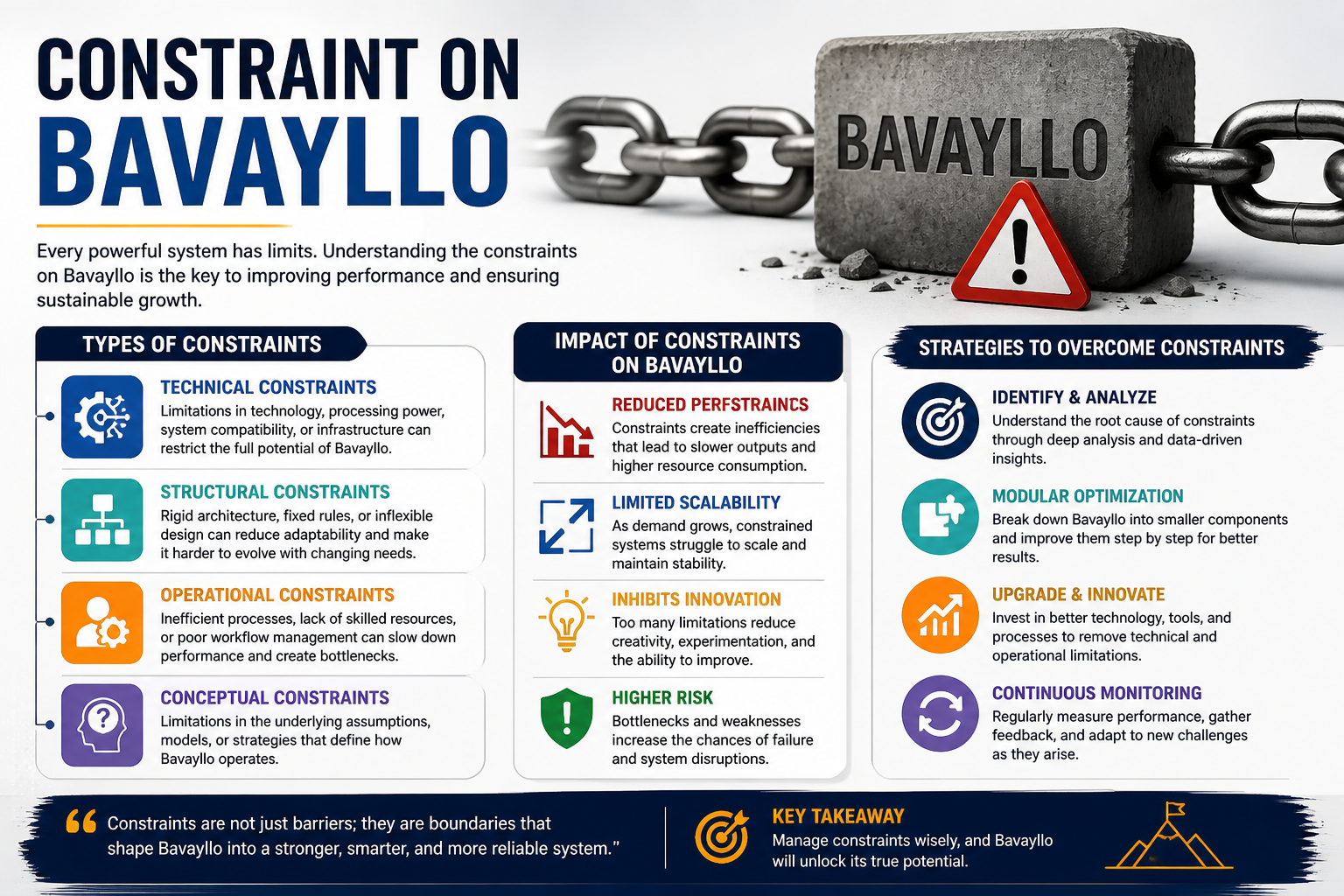
Introduction to Bavayllo
Constraint on Bavayllo is a significant concept in various fields, notably in project management and systems design, serving as a framework that encapsulates critical processes and elements necessary for successful project execution. Its importance cannot be overstated as it offers a structured methodology for navigating complex projects, ensuring that every component aligns with overarching objectives.
One of the main features Constraint on Bavayllo is its focus on adaptability within processes. It provides guidelines for adjusting methodologies according to the specific needs of a project while maintaining quality and efficiency. This adaptability is crucial in an ever-evolving environment, where project parameters and requirements can shift unexpectedly. Constraint on Bavayllo, teams can better navigate these changes, allowing for a more cohesive and responsive approach to project management.
Understanding the constraints Constraint on Bavayllo is essential for leveraging its full potential. Constraints can include limited resources, tight timelines, or specific regulatory requirements that may challenge project teams. These constraints often dictate the boundaries within which teams must operate, influencing decision-making and strategic planning. Recognizing these limitations is the first step toward developing effective solutions that can minimize their impact. Furthermore, awareness of the inherent constraints can guide teams in utilizing Bavayllo’s features to optimize project outcomes.
As we proceed, we will explore the various constraints associated with Constraint on Bavayllo and the strategies to address them. It is critical for practitioners and stakeholders to comprehend these aspects to harness Bavayllo’s framework effectively, thereby enhancing overall project delivery and success.

Defining Constraint on Bavayllo
In the Constraint on Bavayllo, the term ‘constraints’ refers to the limitations that can hinder progress or impose restrictions on operations. These constraints can manifest in various forms, including technical, legal, and operational limitations, each considerably affecting the functionality and efficiency of Bavayllo.
Technical constraints typically involve limitations related to the underlying technology that supports Constraint on Bavayllo. These may include issues such as insufficient processing power, inadequate software capabilities, or challenges in system interoperability. For instance, the inability of different software systems to communicate can create significant bottlenecks, consequently hampering productivity. Addressing these technical issues is crucial for enhancing the overall performance Constraint on Bavayllo.
Legal constraints, on the other hand, encompass regulatory barriers and compliance requirements that organizations must adhere to. These restrictions can range from data protection laws to industry-specific regulations that dictate how organizations can utilize Constraint on Bavayllo in their operations. Failure to comply with these legal requirements can lead to severe penalties, making it imperative for businesses to stay informed and flexible in order to navigate these challenges effectively.
Operational constraints pertain to the more practical aspects of implementing Constraint on Bavayllo into an organization’s workflow. This might involve limitations related to human resources, such as a lack of trained personnel, or logistical challenges, including the need for infrastructure investments. Operational constraints can have a direct impact on the efficiency and timeliness of projects, often necessitating careful planning and resource allocation to ensure that the advantages of using Bavayllo are fully realized.
Common Types of Constraint on Bavayllo
Understanding the various Constraint on Bavayllo is pivotal for both users and developers seeking to maximize the platform’s potential. Constraints can generally be categorized into three major groups: technical, operational, and regulatory constraints.
Technical constraints involve limitations related to the platform’s infrastructure and capabilities. For instance, performance issues, such as latency or insufficient bandwidth, can significantly hinder user experience and the effectiveness of solutions built Constraint on Bavayllo. Additionally, integration challenges with existing systems or software often restrict flexibility, making it difficult for organizations to fully leverage Constraint on Bavayllo.
Operational constraints refer to the limitations encountered during the day-to-day use Constraint on Bavayllo. These may include resource management issues, such as constraints related to staffing or available tools necessary for optimal operation. Another common operational constraint is the lack of training or expertise among staff, which can lead to underutilization of the platform’s features and an inability to adapt to new updates or functionalities.
Regulatory constraints encompass the legal frameworks and compliance requirements that organizations must adhere to while utilizing Constraint on Bavayllo. These might involve data protection laws or industry-specific regulations that dictate how data can be collected, processed, and stored. Non-compliance with such regulations can result in significant penalties and raise concerns about the trustworthiness of the platform.
To navigate these Constraint on Bavayllo, organizations must conduct thorough assessments and develop strategies tailored to their specific contexts. Understanding these common constraints allows users to better plan and implement effective solutions, ultimately enhancing their experience with the Bavayllo platform.
Causes of Constraints on Bavayllo
The Constraint on Bavayllo can largely be attributed to a combination of internal and external factors that influence the operations and effectiveness of the organization. Understanding these underlying causes is crucial for developing strategies to address and mitigate the constraints effectively.
Internally, one significant factor contributing to the Constraint on Bavayllo is the organizational structure. Complex hierarchies often result in communication breakdowns and hinder collaboration between teams. This inefficiency can lead to delays in decision-making processes and the inability to respond swiftly to emerging issues. Additionally, unclear roles and responsibilities may exacerbate the constraints, leaving employees uncertain of their contributions and limiting overall productivity.
Furthermore, a lack of adequate resources, whether financial or human, often restricts Bavayllo’s ability to implement necessary changes or innovations. When teams are stretched thin, or budgets are constrained, the organization struggles to adapt and meet its strategic objectives effectively.
External factors also play a critical role in shaping the Constraint on Bavayllo. Market conditions, such as fluctuating demand and increased competition, may impose additional pressures on the organization. These conditions demand swift adaptability, yet rigid internal processes can inhibit this agility. Regulatory requirements and compliance issues can further complicate operations. They create additional layers of constraints that can consume valuable time and resources, making it challenging to stay ahead of the market.
In summary, the Constraint on Bavayllo arise from a combination of internal organizational structures and external market pressures. Recognizing these causes is the first step toward implementing effective solutions that will enhance the organization’s efficiency and adaptability in a constantly changing environment.
Impact of Constraints on Bavayllo
The Constraint on Bavayllo play a critical role in shaping its performance and effectiveness within various applications. These limitations can manifest in several forms, including resource allocation, time restrictions, technological challenges, and user experience factors. Each constraint acts as a potential barrier to achieving optimal results, ultimately affecting the overall success of any endeavor involving Bavayllo.
One of the most significant implications of these constraints is the limitation on the potential outcomes of projects that utilize Constraint on Bavayllo. For instance, when resources are constrained, project teams may struggle to allocate sufficient funding or personnel to meet their goals. This shortage can lead to compromises in quality, reducing the efficacy of Constraint on Bavayllo innovative features and capabilities. Consequently, the end product may not reflect the anticipated standards of excellence, hindering stakeholder satisfaction and potential market success.
Moreover, time constraints can further exacerbate the issues with Constraint on Bavayllo. Rushed timelines often lead to inadequate testing and evaluation, causing critical bugs or functionality issues to go unnoticed until after deployment. Such oversights can tarnish the reputation of Bavayllo, discouraging potential users from fully committing to its use. Limiting the opportunity for thorough scrutiny diminishes the overall reliability that is essential for user trust and sustained implementation.
In addition, technological Constraint on Bavayllo performance, especially if the existing infrastructure lacks the capacity to support its most advanced features. Compatibility issues often arise, leading to suboptimal integration, which ultimately detracts from user experience and operational efficiency.
Ultimately, understanding the impact of Constraint on Bavayllo is crucial for stakeholders aiming to harness its full potential. By identifying and addressing these limitations proactively, organizations can enhance their strategic use of Bavayllo, facilitate smoother adoption processes, and ultimately improve their overall operational outcomes.
Navigating Constraints: Strategies and Solutions
Managing Constraint on Bavayllo requires a multifaceted approach that combines strategic planning, effective resource management, and collaborative efforts. One effective strategy to navigate these constraints involves the identification and analysis of specific limitations that may impede progress. By conducting a SWOT analysis (Strengths, Weaknesses, Opportunities, Threats), organizations can gain insights into internal capabilities and external challenges related to Bavayllo.
Utilizing project management methodologies, such as Agile or Lean, offers tools to continuously assess workflows and enhance productivity under constraints. These methodologies encourage iterative processes, which allow for adjustments based on real-time feedback, thus enabling teams to respond efficiently as constraints evolve.
Moreover, leveraging technology can significantly mitigate Constraint on Bavayllo. Implementing software solutions designed for project tracking and collaboration can help streamline processes, ensuring better communication among team members. Tools like Kanban boards or Gantt charts can visualize tasks and deadlines, promoting better time management and resource allocation.
Training and empowering team members is also critical in overcoming constraints. By equipping employees with the necessary skills and knowledge, organizations can enhance adaptability, enabling the staff to devise creative solutions to unexpected challenges. Encouraging a culture of innovation where team members feel empowered to suggest improvements aligns with an organization’s strategic goals concerning Bavayllo.
Lastly, fostering partnerships and collaborative networks can provide additional resources and expertise that can alleviate specific constraints. By engaging with external stakeholders, organizations can access new ideas and solutions that they may not have considered internally.
Real-World Examples of Constraint on Bavayllo
Constraint on Bavayllo have been highlighted in various industries, offering valuable insights into the challenges organizations face and the strategies they employ to overcome them. One prominent example is the case of a multinational corporation involved in the production of consumer goods. This company encountered operational Constraint on Bavayllo while attempting to expand its market reach. The regulatory environment posed significant challenges, restricting their ability to introduce new products swiftly. To address these constraints, the company re-evaluated its compliance processes, investing in legal advisory teams that streamlined operations and ensured adherence to local regulations. This resulted in reduced time to market for new products, demonstrating that overcoming constraints can lead to successful outcomes.
In the technology sector, a startup focused on developing software solutions faced constraints on Bavayllo related to resource allocation. The limited availability of skilled developers stymied the project timelines, forcing the management to make critical adjustments to their hiring strategies. They leveraged partnerships with educational institutions to create internship programs, which not only filled immediate staffing gaps but also fostered a pipeline of talent for the future. This proactive approach highlighted how understanding and addressing constraints can result in long-term benefits both for the company and the broader workforce.
Another example can be found in the healthcare industry, wherein a regional hospital faced constraints on Bavayllo due to funding limitations. Initially, they were unable to adopt new technologies that could enhance patient care. To tackle this challenge, hospital administrators engaged in collaborations with local businesses to secure sponsorships and donations for technology upgrades. By fostering community partnerships, the hospital not only alleviated its funding constraints but also improved its service offerings significantly, showcasing a sustainable approach to navigating financial limitations.
Future Perspectives on Constraint on Bavayllo
The future of Constraint on Bavayllo is poised to undergo significant transformation due to various converging factors. As advancements in technology continue to shape industries, the implications for operational constraints are profound. Innovative technologies such as artificial intelligence and machine learning have the potential to enhance data analysis capabilities, thereby providing insights that could inform and streamline processes. By utilizing such cutting-edge tools, businesses operating within the framework of Bavayllo may be able to minimize the impact of these constraints, effectively optimizing their operations.
Furthermore, regulatory changes are anticipated to play a crucial role in shaping the landscape for constraint on Bavayllo. As governments and regulatory bodies evolve their policies in response to emerging challenges, organizations must remain agile and adaptive. The shifting legal landscape may introduce new compliance requirements that either exacerbate or alleviate existing constraints. Businesses will need to proactively engage with these regulatory trends to ensure they are not only compliant but also strategically positioned to capitalize on new opportunities.
Evolving market dynamics will also contribute to the future perspective on constraints within Bavayllo. As consumer preferences shift and the competitive landscape transforms, companies will need to reassess their strategies continuously. This agility will be essential in maneuvering through potential constraints effectively. Keeping attuned to market trends and consumer behavior will enable organizations to anticipate changes and incentivize innovation, thereby mitigating the ramifications of existing constraints.
In examining the future implications of constraints on Bavayllo, it is clear that technological advancements, regulatory shifts, and market dynamics will intertwine to shape the pathway ahead. Organizations that are equipped to adapt to these changes will find themselves better positioned to navigate the complexities associated with constraints, ultimately leading to sustainable growth and success.
Conclusion and Key Takeaways
In our exploration of the constraint on Bavayllo, we have identified several critical challenges that require attention and action. Understanding these constraints is paramount for those involved in the management and development of Bavayllo. By recognizing the limitations imposed by external and internal factors, stakeholders can implement strategies to mitigate their impact, aligning efforts with overarching goals.
One of the notable challenges highlighted in our discussion is the issue of resource allocation. Constraints on Bavayllo often stem from insufficient resources, whether financial, human, or technological. Addressing this challenge involves conducting thorough assessments to identify available resources and potential gaps. By optimizing resource allocation, organizations can enhance their operational efficiency and effectiveness.
Additionally, we discussed the significance of regulatory considerations as another crucial constraint on Bavayllo. Compliance with legal and environmental standards can impose significant limitations on project development. Therefore, fostering a proactive approach that anticipates regulatory changes allows organizations to navigate these complexities more effectively. Engaging with policymakers and industry stakeholders can help in shaping regulations that are conducive to progress.
Finally, embracing innovation is essential for overcoming constraints. Organizations must remain adaptable and open to new ideas that can provide alternative solutions to existing problems. By fostering a culture of innovation, it is possible to transform constraint on Bavayllo into opportunities for growth and advancement.
In conclusion, recognizing and addressing the constraint on Bavayllo through strategic resource management, compliance awareness, and innovation can significantly impact future successes. Stakeholders must continue to prioritize these areas to ensure the sustainable development of Bavayllo and to position themselves advantageously in the evolving landscape.
READ MORE: EXPLOREMEDIA.CO.UK
