
The Python ecosystem evolves rapidly, with new tools, frameworks, and development ideas appearing every year. Recently, one unusual term has started attracting attention across blogs, forums, and tech discussions: “bvostfus python.” Many developers searching for this phrase want to understand whether it is a real Python framework, an experimental software platform, or simply a conceptual idea connected to modern Python development.
At the moment, there is no official PyPI package, GitHub repository, or verified documentation for Bvostfus Python. However, several online discussions describe it as a modern Python-based development environment focused on automation, dependency management, configuration handling, and workflow optimization. Because of this growing curiosity, the term has become associated with advanced Python practices, modular coding structures, and streamlined software development.
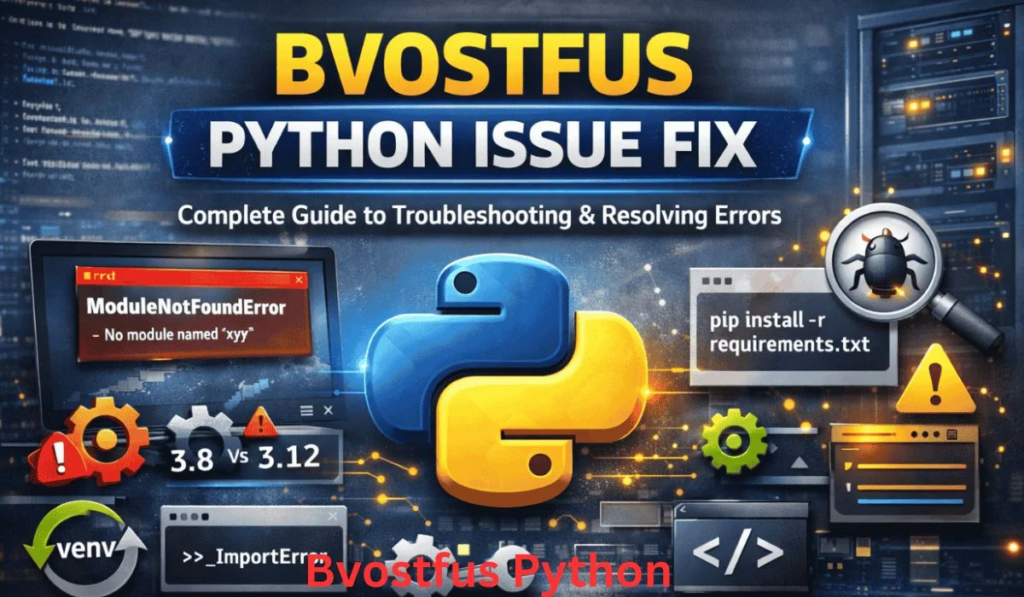
Understanding the Meaning of Bvostfus Python
Bvostfus Python is widely discussed as a possible software framework or integrated development concept built around Python 3.10+ features. Most sources describe it as a system designed to reduce repetitive coding, improve configuration management, and simplify large-scale Python projects. Although no verified public release currently exists, the discussions surrounding the term highlight real developer needs within modern Python workflows.
One important detail developers should understand is that Bvostfus Python is not officially recognized within the mainstream Python ecosystem. Searches across trusted repositories reveal no confirmed installation package or active open-source community. This has led many experts to believe the name may represent an internal project, conceptual prototype, or placeholder term rather than a production-ready framework.
Despite this uncertainty, the growing interest around the phrase reflects a broader industry trend toward unified Python tooling. Developers increasingly want systems that combine dependency management, automation, formatting, environment isolation, and project configuration into one organized workflow.
Why Developers Are Interested in Bvostfus Python
The popularity of Python continues to grow because of its simplicity, flexibility, and extensive library ecosystem. However, as projects become larger and more complex, developers often struggle with fragmented workflows. Managing dependencies, configuring environments, organizing modules, and maintaining clean architecture can quickly become difficult in enterprise-level applications.
This is where the concept behind Bvostfus Python becomes attractive. Articles discussing the term frequently describe a platform capable of integrating multiple development tools into a centralized system. Such an approach could potentially reduce development time while improving code consistency and maintainability.
Modern developers are also increasingly focused on automation and scalable project structures. Many Python applications today involve artificial intelligence, machine learning, backend APIs, cloud infrastructure, and large-scale data pipelines. These environments require better workflow organization, which explains why ideas like Bvostfus Python generate curiosity even without official confirmation.
Another reason for the attention is the rise of modern Python features such as structural pattern matching, asynchronous programming, advanced type hints, and modular architecture patterns. Discussions about Bvostfus Python often connect the concept with these newer Python capabilities.
Core Features Commonly Associated With Bvostfus Python
Although there is no verified technical specification, multiple sources consistently associate several advanced capabilities with Bvostfus Python. One commonly mentioned feature is unified dependency management. This would allow developers to handle package installation, environment isolation, and project requirements from a single configuration system instead of relying on multiple disconnected tools.
Another frequently mentioned feature is configuration automation. Some articles suggest the framework may use YAML or TOML-based configuration files to organize project settings, dependencies, and runtime options. This aligns with current industry practices where developers increasingly prefer centralized configuration management for scalable applications.
The concept is also connected with automation-driven development workflows. Instead of manually repeating coding tasks, developers could theoretically use built-in automation modules for formatting, linting, testing, and deployment preparation. This would significantly improve development speed while reducing human error.
Several discussions also describe enhanced toolkit integration as a possible advantage. In many Python projects, developers combine frameworks such as FastAPI, Pydantic, NumPy, TensorFlow, and database libraries. A unified management layer could simplify compatibility and improve workflow consistency across large projects.
The Relationship Between Bvostfus Python and Modern Python Development
Even if Bvostfus Python never becomes an official framework, the ideas associated with it closely reflect the direction modern Python development is already taking. Developers today prioritize clean architecture, modular programming, automated workflows, and scalable project organization.
Python itself has evolved significantly in recent years. Features introduced in Python 3.10 and later versions support better readability, more powerful type systems, and improved asynchronous programming. These advancements make it easier to build structured applications that remain maintainable over time.f(x)=x2+2x+1
Many modern Python frameworks already focus on minimizing boilerplate code while encouraging reusable components and standardized project structures. This is one reason why some developers view Bvostfus Python more as a development philosophy than a standalone product. The term often symbolizes the push toward simplified yet highly organized Python ecosystems.
This trend is especially visible in machine learning engineering, cloud-native backend systems, and automation platforms, where maintaining clean dependencies and stable environments is essential for long-term reliability.
Installation Discussions and Community Speculation
One of the most searched phrases connected to this topic is “install bvostfus python.” However, current research shows there is no officially verified installation command available through trusted package repositories such as PyPI. Most installation guides published online are speculative or hypothetical.
Some websites describe possible commands such as pip installation methods or virtual environment setup procedures, but these instructions are not supported by official documentation. Developers should therefore approach such claims carefully and avoid installing unverified software from unknown sources.
Security remains extremely important when exploring emerging development tools. Installing unofficial packages from untrusted repositories can introduce vulnerabilities, malicious code, or unstable dependencies into a development environment. Best practices include testing unknown tools inside isolated virtual environments and verifying the credibility of repositories before installation.
The broader lesson here is valuable for all developers, especially beginners. In the modern software industry, new terms and technologies can spread quickly through blogs and social media before official verification exists. Responsible developers should always confirm documentation, repository authenticity, and community support before integrating tools into production systems.
How Bvostfus Python Relates to Existing Python Tools
Many of the capabilities associated with Bvostfus Python already exist within trusted Python frameworks and development tools. For example, dependency management can be handled through Poetry or Pipenv, while formatting and linting are commonly managed using Black, Ruff, or Flake8. FastAPI and Pydantic provide advanced backend and validation systems that support modern asynchronous applications.
Because of this, some experts believe Bvostfus Python may simply represent a conceptual combination of already existing technologies rather than an entirely new framework. The idea of bringing multiple development tasks under one interface is certainly attractive, but many established solutions already address these requirements effectively.
The Python community has historically embraced modularity. Instead of relying on one massive platform, developers often combine specialized tools that work together efficiently. This flexible ecosystem is one reason Python remains dominant in fields such as data science, web development, artificial intelligence, cybersecurity, and automation.
Still, the curiosity around Bvostfus Python highlights an important demand within the developer community. Many programmers want simpler workflows, fewer configuration conflicts, and more unified project management systems.
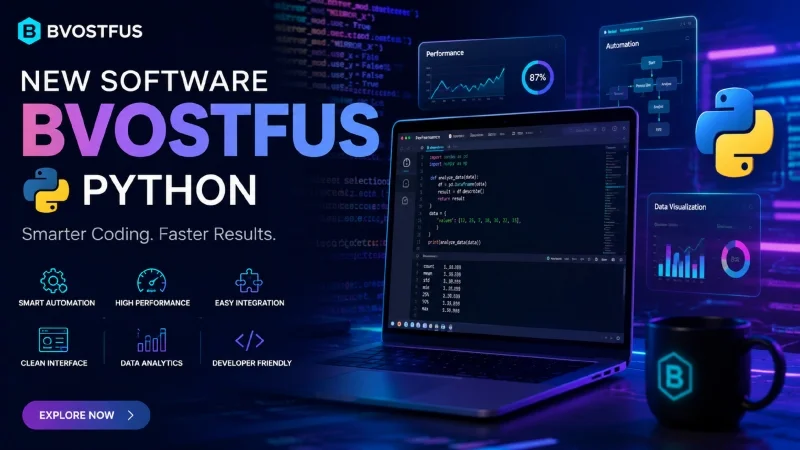
Potential Use Cases Associated With the Concept
The ideas linked with Bvostfus Python are particularly relevant for complex software environments. Automation systems, data engineering pipelines, backend services, and machine learning workflows all require strong dependency control and maintainable architecture.
In large automation projects, repetitive scripts often become difficult to organize over time. A centralized configuration and execution system could improve reliability while reducing debugging complexity. Developers managing cloud services or API infrastructures also benefit greatly from structured project environments and predictable deployment behavior.
Machine learning projects are another area where such concepts become valuable. Data science workflows commonly involve conflicting library versions, GPU dependencies, and resource-intensive environments. Better environment isolation and dependency tracking can improve reproducibility and reduce compatibility problems.
Even beginner developers can benefit from adopting the principles often associated with Bvostfus Python. Writing modular code, organizing functions clearly, managing dependencies carefully, and using isolated environments are all best practices that improve long-term coding quality regardless of the specific tools being used.
Challenges and Concerns Surrounding Bvostfus Python
One major issue surrounding Bvostfus Python is the lack of verified technical evidence. Without official repositories, documentation, or active maintainers, it is impossible to confirm whether the project truly exists as a public framework. This uncertainty has caused confusion among developers searching for accurate information.
Another concern is the spread of speculative or misleading content online. Some articles present Bvostfus Python as a fully developed framework without providing verifiable proof. This creates unrealistic expectations and may lead inexperienced developers toward unreliable downloads or unsupported installation methods.
Transparency is extremely important in the software industry. Trusted frameworks typically provide open documentation, active communities, issue tracking systems, version histories, and security updates. Without these elements, developers should avoid depending on unverified tools for professional or production use.
At the same time, the discussion itself demonstrates how rapidly developer communities respond to new ideas. Even conceptual frameworks can influence conversations around software architecture, workflow optimization, and future development trends.
The Future of Unified Python Development Platforms
Whether Bvostfus Python eventually becomes a real framework or remains a conceptual term, the underlying ideas are highly relevant to the future of software engineering. Developers increasingly demand unified workflows that simplify project setup, reduce configuration complexity, and improve maintainability.
The evolution of Python development already points in this direction. Modern tooling focuses heavily on automation, environment reproducibility, type safety, asynchronous execution, and integrated project management. Future frameworks will likely continue combining these capabilities into more streamlined ecosystems.y=mx+b
Artificial intelligence development, cloud-native infrastructure, and scalable backend services will further increase the demand for reliable workflow automation. Systems capable of simplifying dependency management while maintaining performance and security will become even more valuable in enterprise environments.
The attention surrounding Bvostfus Python ultimately reflects broader developer priorities rather than just curiosity about a mysterious term. Programmers want tools that reduce complexity without sacrificing flexibility, and the Python ecosystem will continue evolving to meet those expectations.
Final Thoughts on Bvostfus Python
Bvostfus Python remains an unusual and somewhat mysterious term within the software development community. Current evidence suggests it is not an officially recognized Python package or publicly verified framework. Most available information appears speculative, conceptual, or based on unconfirmed discussions.
However, the growing attention around the phrase reveals something important about modern software engineering. Developers increasingly seek unified solutions for dependency management, workflow automation, configuration handling, and scalable project organization. The concepts associated with Bvostfus Python align closely with real industry trends already shaping the future of Python development.
For developers, the best approach is to focus on trusted tools, verified frameworks, and strong coding practices while remaining open to emerging ideas. Whether Bvostfus Python eventually becomes a real framework or simply remains a symbolic concept, the conversation around it highlights the ongoing evolution of Python toward cleaner, faster, and more maintainable development ecosystems.
READ MORE: EXPLOREMEDIA.CO.UK
